The Pascagoula River · Pascagoula River
riverInside the cypress and tupelo swamp
Trees that stand in water for months, roots that rise into the air, and a forest that floods and drains with the river. Here is how the swamp works.
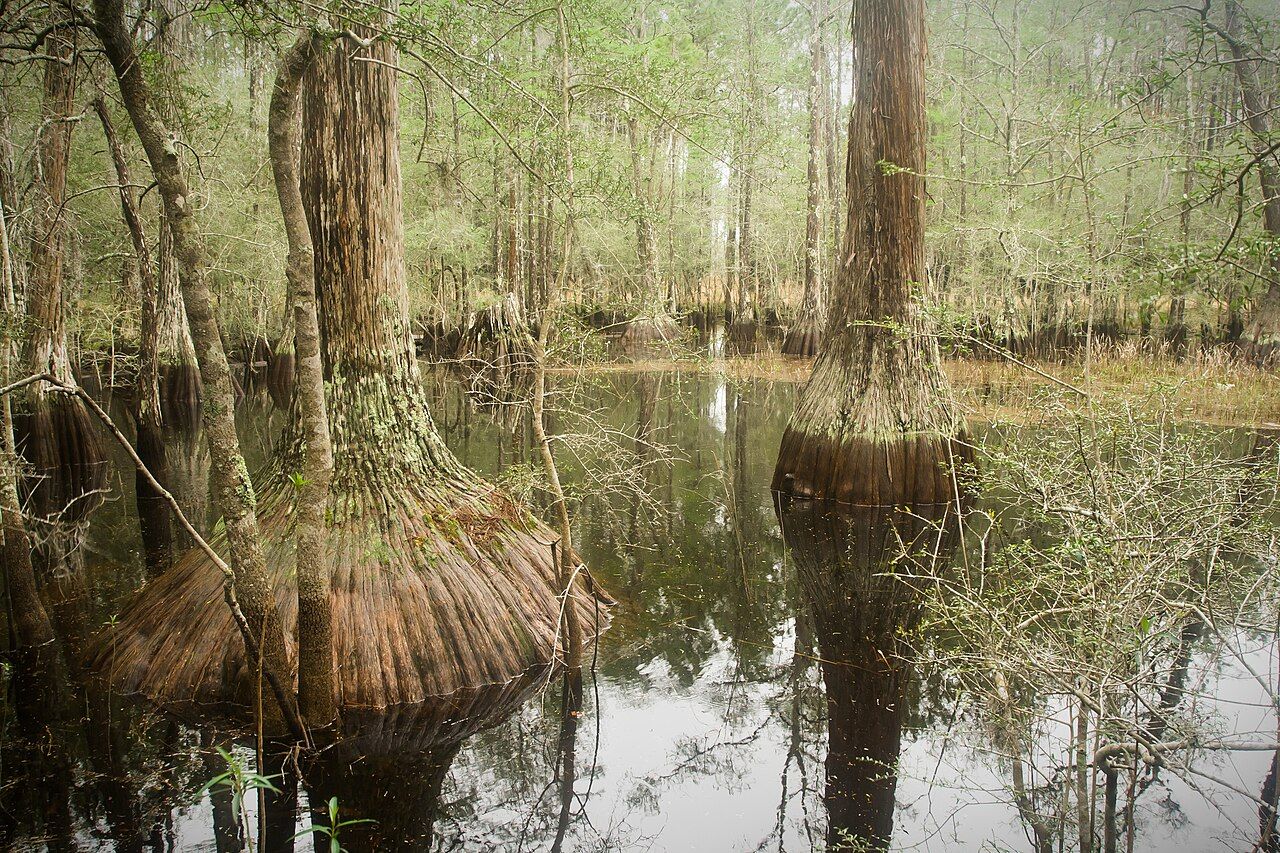
A cypress swamp looks still. The water is dark, the trunks rise straight out of it, and on a calm morning the reflections are so sharp that it is hard to tell where the trees end. But the swamp is never really still. Water moves through it slowly, rising and falling with the river, and the trees that live here have shaped themselves around that movement.
The lower Pascagoula River holds one of the larger swamps on the Gulf Coast. This guide explains what you are looking at when you enter it, what to watch for, and how to see it safely.
Two trees that live in water
Two trees dominate the deepest parts of the swamp: the bald cypress and the tupelo. Both can stand in water for long periods, something that would drown most trees, and both grow where the ground floods for part of every year.
The bald cypress is a conifer, but an unusual one. Its soft, feathery needles turn a rusty orange in autumn and fall in winter, which is where the word "bald" comes from. Old cypress trees can live for centuries, and their wood resists rot, which is why so many were cut for timber in the late nineteenth and early twentieth centuries. Many of the cypress you see today grew after that logging, though large old trees survive in places that were hard to reach.
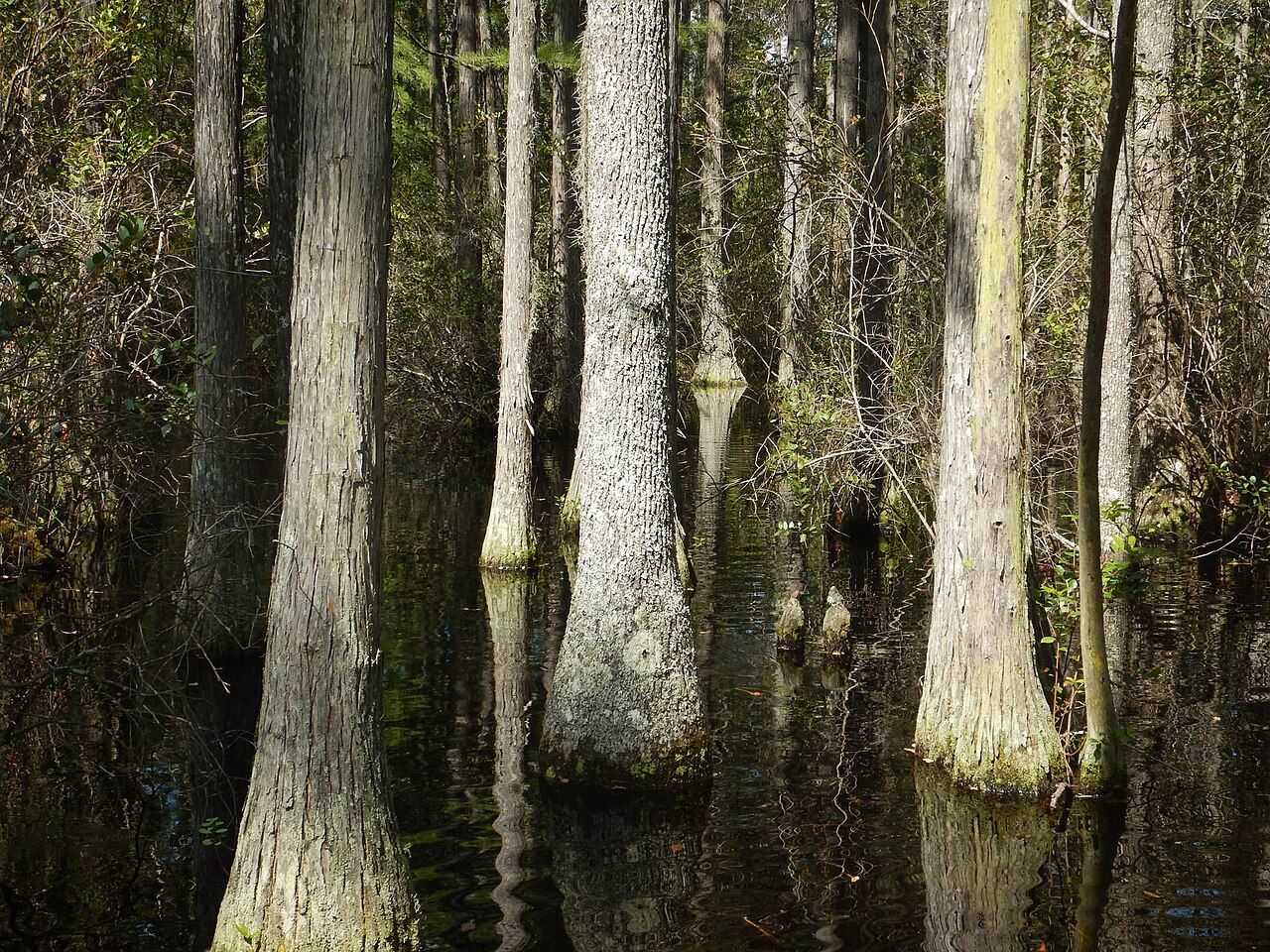

Tupelo grows alongside the cypress. There are two kinds you are likely to meet in this region, the water tupelo and the swamp tupelo, and telling them apart is a job for a botanist. Tupelo trunks are smooth and pale grey, with broad leaves rather than needles, and in spring the flowers draw bees. Beekeepers prize the tupelo bloom, and tupelo honey is a well-known product of Southern swamps.
Knees and buttresses
The most striking features of the swamp are not the trunks themselves but what happens at their base. Both trees swell into wide, flared bases, often called buttresses, where they meet the water. The swelling tends to form along the line where the water usually stands, so a buttress can act as a rough record of the swamp's normal water level.
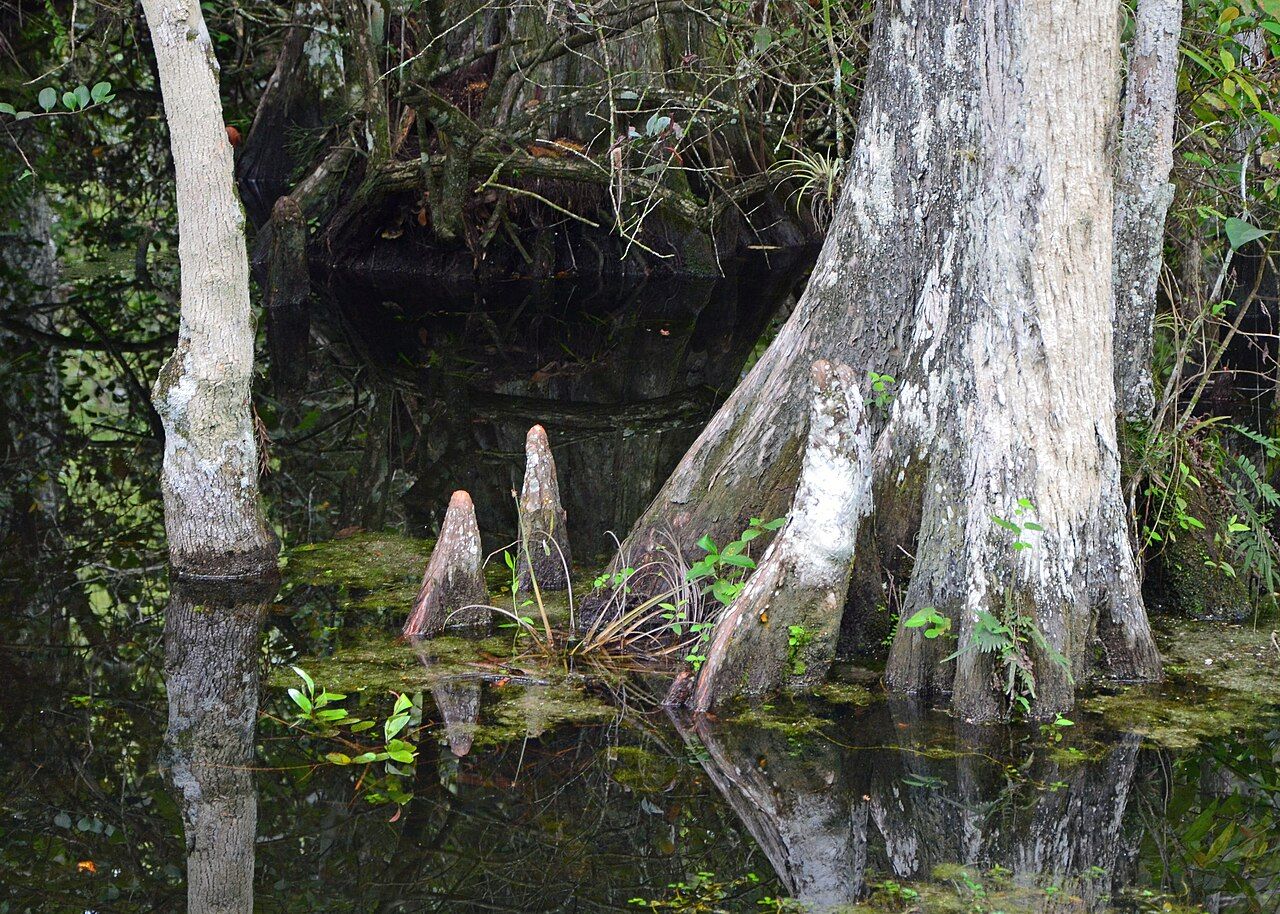

Around the cypress rise the knees: woody cones and knobs that grow up from the roots and stand above the water, sometimes a few inches high, sometimes taller than a person. Nobody is entirely sure what they are for. They were long thought to help the roots breathe in waterlogged soil, but that idea has been questioned. Other suggestions are that they help anchor the tree in soft mud or store food. It is one of those small mysteries that makes a swamp worth looking at closely.
Nobody is entirely sure what they are for.
Knees are also an obstacle. In shallow water they hide just below the surface, and they will stop a canoe or kayak abruptly. Paddle slowly where you see them, and watch the water ahead for the slight swirl that marks one hidden underneath.
High water and low water
The Pascagoula has no dam on its main stem, so its swamp still floods and drains in a natural rhythm. In late winter and spring, after rain upstream, the river spills into the forest and you can paddle between trees that stand on dry ground in autumn. In late summer and autumn the water drops, sloughs shrink, mud flats appear, and fish crowd into the remaining pools. To understand that rhythm in the wider river, read the guide to the Pascagoula, an undammed river.
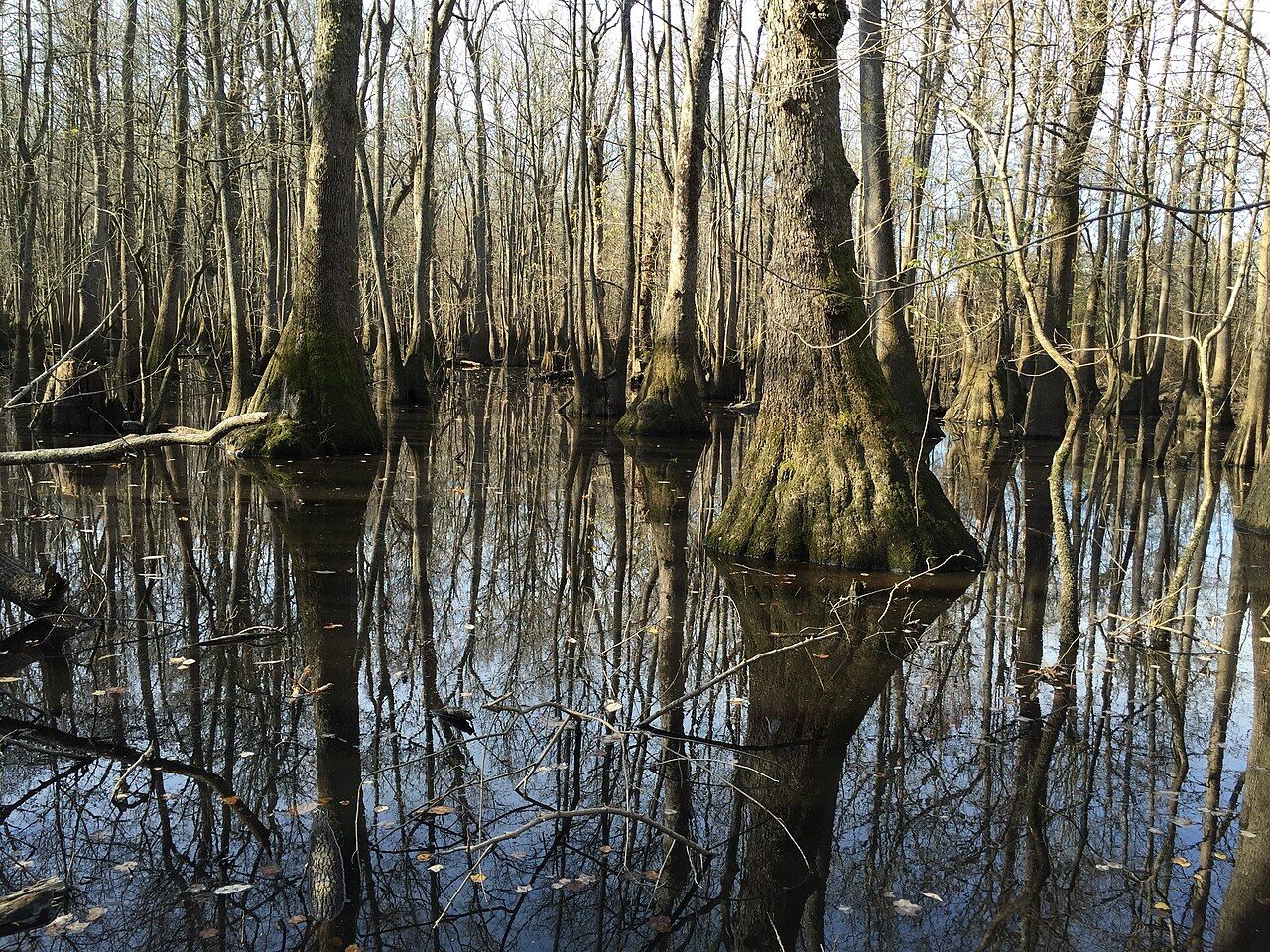

The rhythm is what keeps the swamp healthy. Cypress seeds need a wet period to sprout and then a dry spell to take root, and flooding carries nutrients into the forest. It also means the swamp you see changes from month to month. A route that was open in April may be a mudflat in October.
Further down the waterPaddling the rivers and bayousWinter, when the cypress has dropped its needles and the tupelo its leaves, is a good time to see the swamp's structure. Light reaches the water, the trunks and knees stand out clearly, and the insects are fewer.
Alligators, snakes and other neighbors
American alligators live throughout the lower river and its swamps. Most of the time they are wary of people and slide into the water as you approach. Give them space, never feed them, and be especially careful in late spring and summer, when females guard nests and young. Keep pets on a leash and away from the water's edge.
Several snakes live in the swamp. Most are harmless water snakes, but the cottonmouth, or water moccasin, is venomous and common in this habitat. Watch where you put your hands when grabbing branches or climbing onto logs, and step onto logs rather than over them. If you see a snake, give it room and let it move away.
The swamp is also home to many birds: prothonotary warblers, a bright yellow songbird of flooded forest, nest in tree holes in spring; barred owls call in the daytime as well as at night; herons and egrets stand in the shallows. The guide to birds of the Mississippi coast covers what you may see.
Fish move through the swamp with the water. Bowfin, gar and sunfish live in the sloughs, and when the river drops they gather in the deeper pools, drawing herons and alligators to the easy feeding.
Smaller creatures matter more to your comfort. Mosquitoes, deer flies and biting midges can be fierce from spring to autumn. Long sleeves, repellent and a head net are worth packing.
Seeing the swamp safely
The best way into the swamp is by small, quiet boat: a canoe or a kayak lets you slip into side channels where motorboats cannot go. Public launches along the lower Pascagoula give access, and the river's wildlife management area includes large stretches of bottomland. For practical advice, see the guide to paddling the rivers.
- Navigation: channels look alike and phone signal is unreliable. Carry a paper map or a downloaded one, note landmarks, and turn around early.
- Water levels: check the river gauge before you go. High water brings strong currents through the trees; low water strands boats.
- Weather: summer thunderstorms build fast. Lightning on open water is dangerous; head for shore at the first rumble.
- Heat: carry plenty of water. Heat exhaustion is a real risk in the humid summer swamp.
- Company: go with someone else if you can, and tell a person on shore your plan and your expected return.
Leave the swamp as you found it. Do not cut branches or carve trees, take your rubbish out with you, and keep noise low. The quiet is part of the place, and the wildlife will reward you for it.