Bayous and marshes · Gautier
on landThe rare cranes of the pine savanna
A small population of sandhill cranes lives year-round in the wet pine savanna of Jackson County, protected by a national wildlife refuge built around them.
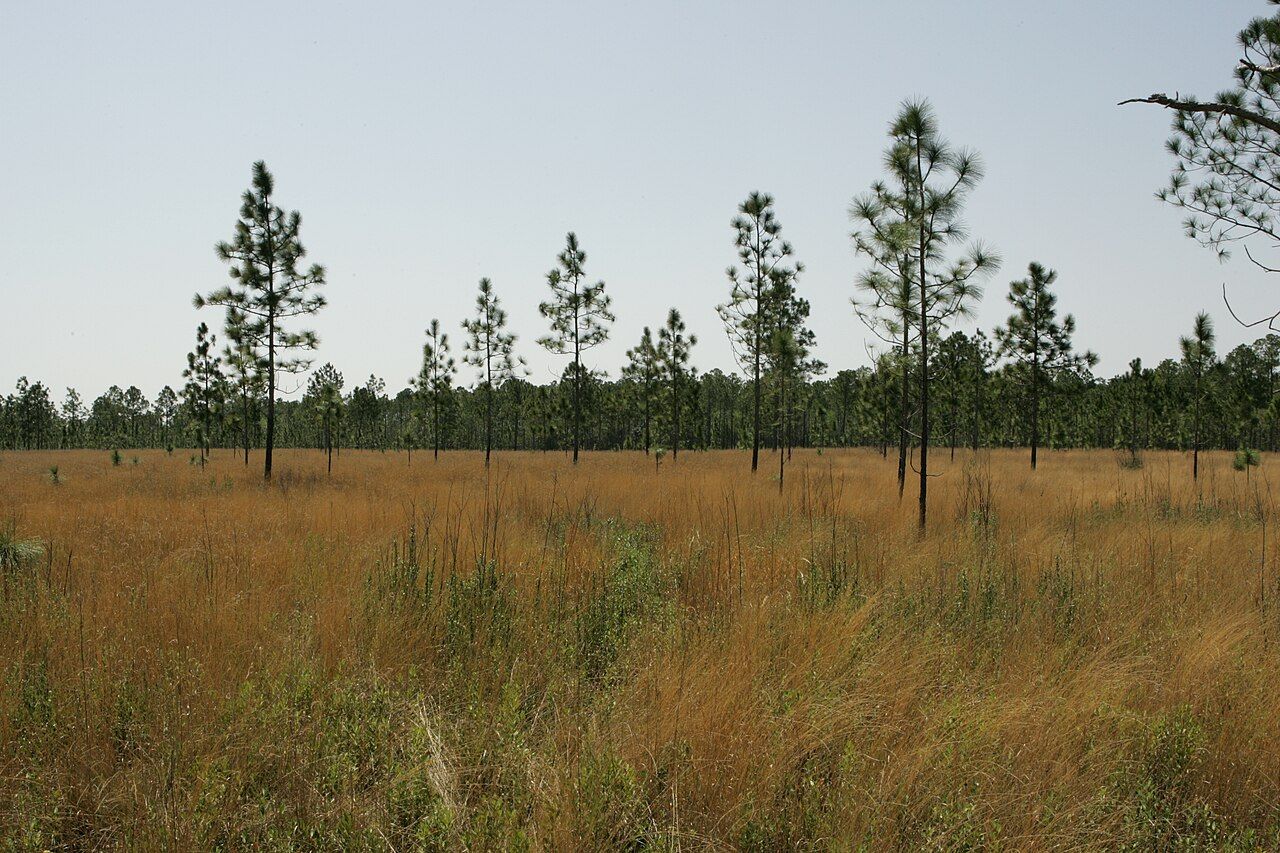
Most sandhill cranes in North America are travellers. Each autumn they fly south in great noisy flocks, and each spring they head back north. The cranes of the Mississippi coast stay put. The Mississippi sandhill crane is a distinct subspecies that does not migrate, living year-round in the wet pine savannas of Jackson County, and it is one of the rarest birds in the country.
A crane that stays at home
The Mississippi sandhill crane looks much like other sandhills: a tall grey bird with a long neck, long legs and a patch of red skin on the crown. It is a little darker than some of its relatives, and up close the grey plumage can look stained with rusty brown where the birds preen mud into their feathers.
What sets it apart is its life. These cranes pair for the long term, defend territories in the savanna, and raise usually one or two chicks a year. They feed on seeds, roots, insects and small animals picked from the wet ground. Their call is a rolling, trumpeting rattle that carries a long way across open country. Pairs often call together in a duet, the two birds lifting their heads and answering each other, and the sound is often the first sign that cranes are nearby.
They need a very particular landscape: open, wet, grassy savanna with scattered pines, where they can see danger coming and find shallow ponds to nest in. As that landscape was drained, planted with dense pine or built over, the cranes declined to a very small number.
A refuge built for one bird
The Mississippi sandhill crane was listed as endangered in the early 1970s, and the Mississippi Sandhill Crane National Wildlife Refuge was created soon after, specifically to protect it. The refuge covers a large area of savanna, pine flatwoods and swamp in Jackson County, near Gautier and Ocean Springs, and it is the core of the crane's remaining range.
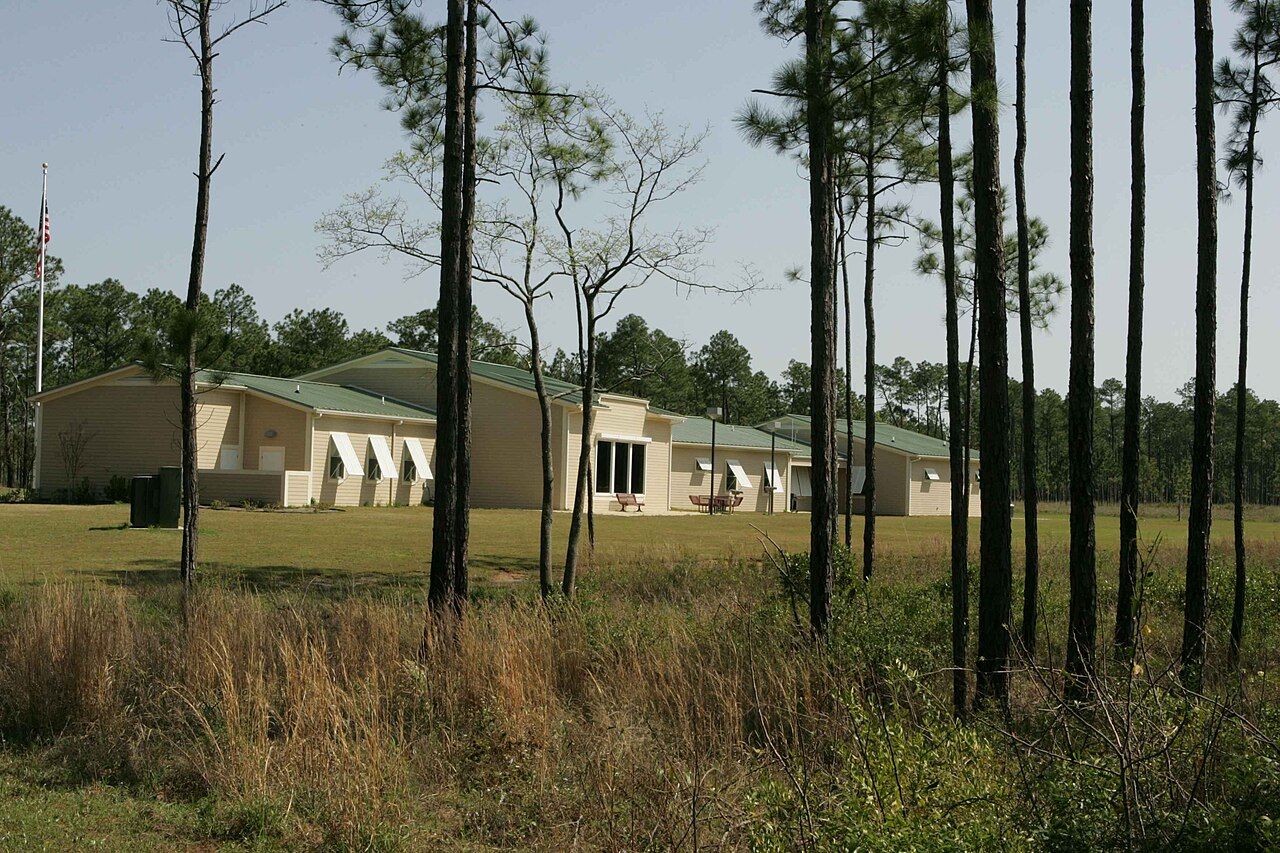

Protecting the land was only the first step. For many years, cranes raised in captivity have been released on the refuge to boost the wild population. Refuge staff also restore savanna, fill old drainage ditches, and burn the land regularly to keep it open. The population remains small, and its future depends on that work continuing.
The refuge has a visitor center near Gautier with exhibits about the cranes and the savanna, and a short nature trail nearby.
Wet pine savanna
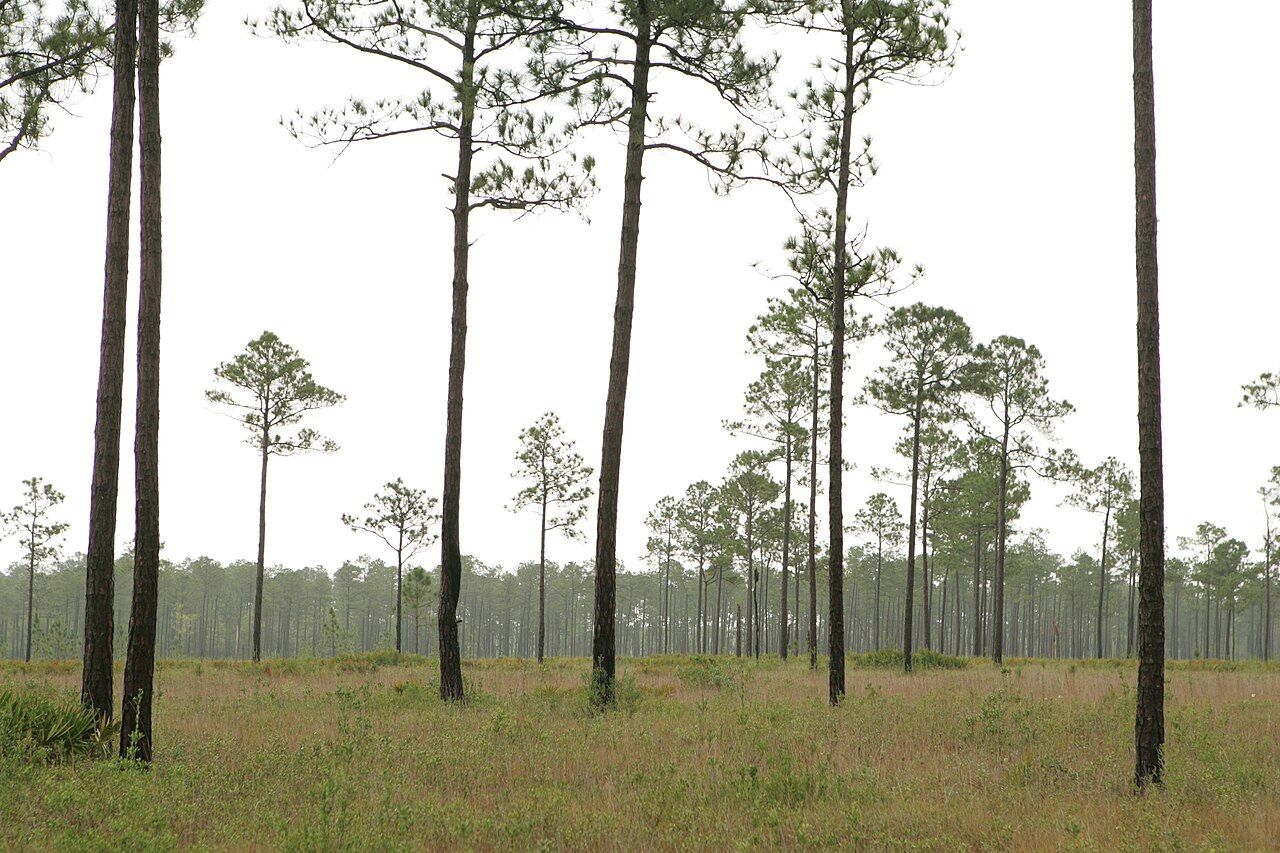
The savanna the cranes depend on is worth seeing for its own sake. Tall longleaf and slash pines stand well apart, and beneath them is a carpet of grasses, sedges and wildflowers that is among the richest plant communities on the continent.
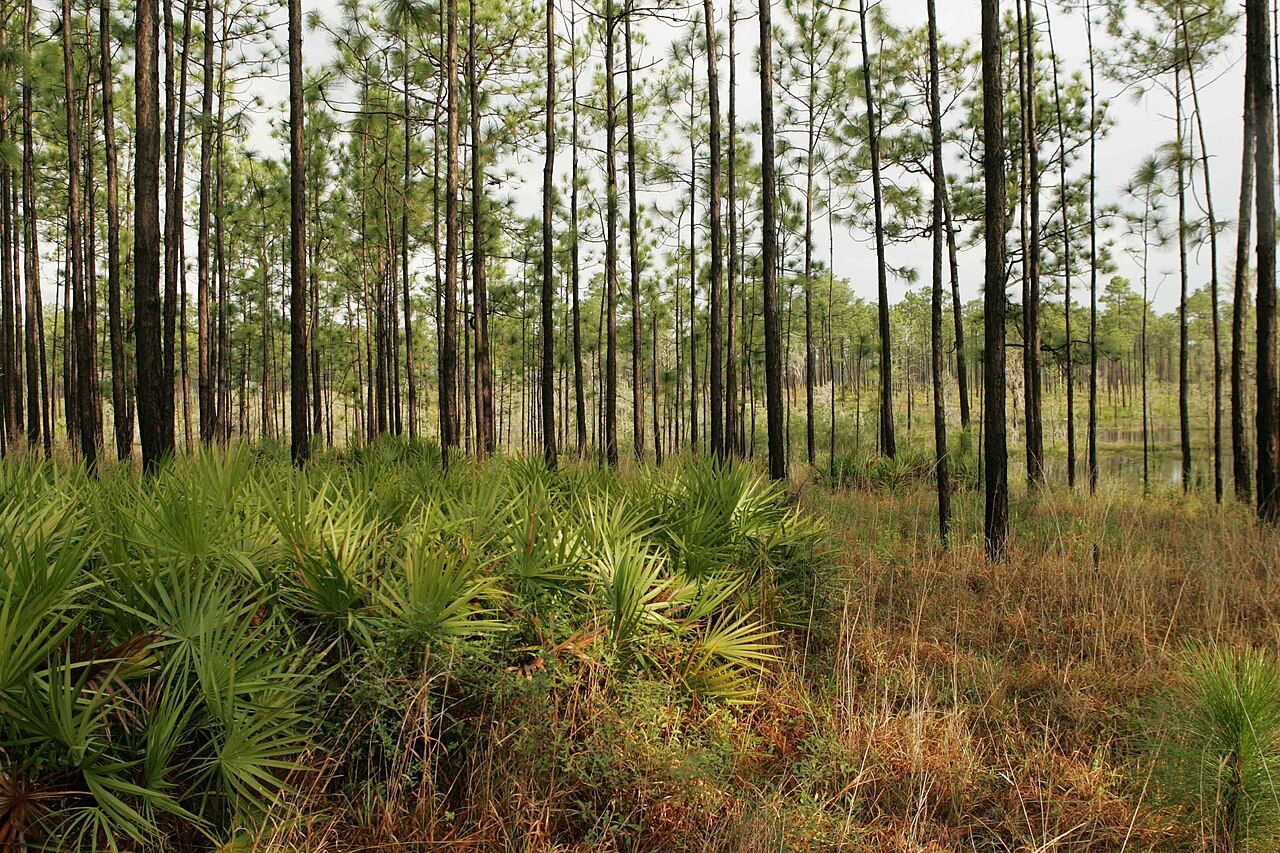

This is the home of carnivorous plants. Pitcher plants grow tall, trumpet-shaped leaves that trap insects, while sundews catch them on sticky hairs. Orchids, meadow beauties and other flowers bloom from spring into autumn.
Further down the waterGrand Bay, where the marsh meets the pinesLike the savanna at Grand Bay, described in the guide to Grand Bay's marshes, this land depends on fire. Before people suppressed wildfires, lightning burned the savanna every few years, clearing shrubs and keeping the ground open. Today managers use prescribed burns to do the same job, and blackened patches turn green again quickly.

Seeing the cranes responsibly
Seeing a Mississippi sandhill crane takes luck and patience. Most of the refuge is closed to the public to protect nesting birds, and the cranes are shy. Many visitors walk the trail and see none at all. Others hear them before they see them.
The best chances usually come in winter, when the cranes gather in groups and sometimes feed in open fields. The refuge has offered guided walks in the cooler months in some years; ask at the visitor center about current programs.
- Keep your distance: use binoculars or a long lens. If a crane changes what it is doing because of you, you are too close.
- Stay on trails and roads: closed areas are closed for a reason, especially during the nesting season.
- Never feed cranes: birds that lose their fear of people are more likely to be hit by cars or harmed.
- Drive slowly: cranes sometimes walk along roadsides near the refuge, and collisions with vehicles are a real threat.
Even without a crane, the savanna rewards a slow walk. Look for pitcher plants, listen for woodpeckers, and watch for other birds of open pine country. The guide to birds of the Mississippi coast covers more of what you may see.
When to go and what to bring
Cool, dry days between late autumn and early spring are the most comfortable. Summer is hot and humid, with frequent afternoon thunderstorms and many insects. After heavy rain, the savanna floods and trails can stay wet for days.
Bring binoculars, water and insect repellent, and wear shoes you do not mind getting muddy. Check the refuge's current rules and opening times before you set out. The cranes have survived because people made room for them; the least a visitor can do is give them space.